Is it too late to start over at 60?
No. Starting over after 60 can mean rebuilding your daily routine, discovering a new interest, learning a skill, creating a business, or adjusting to a major life change. Begin by recognizing your current needs and resources, choosing a goal that matters to you, and taking a small, realistic step. You don't have to reinvent your entire life to make its next chapter meaningful.
- Start with your needs, resources and strengths today.
- Choose an interest or goal that matters to you.
- Take a small, realistic step this week.

I'm 64 years old, and this year I began publishing books. I'm a mother of six, a grandmother, a Coast Guard veteran and a business owner. I've experienced changes I never expected, and there have been times when I wondered what the next part of my life would look like.
When I started writing, I found something new that I genuinely enjoyed. I wasn't beginning my adult life again. I was beginning something different with everything my life had already taught me. That experience helped inspire my book, You're Not Too Old to Start Over.
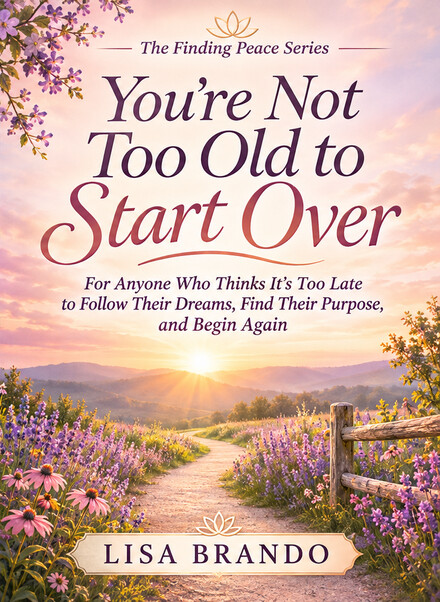
From The Finding Peace Series
You're Not Too Old to Start Over
For anyone who thinks it's too late to follow their dreams, find their purpose and begin again.
What does starting over after 60 really mean?
Starting over can look very different from one person to another. Perhaps you have retired and miss the structure of work. You may be adjusting to the end of a relationship, living farther from family, dealing with changes in your health, or trying to find a new sense of purpose.
Some changes are chosen. Others happen whether we want them or not. I don't believe we have to look at every loss as a blessing. You can be genuinely sad about a chapter ending and still hope for something meaningful in the chapter ahead.
7 practical ways to start over after 60
1. Begin with the life you have today
Write down the things that are important in your present circumstances: housing, health, relationships, money, responsibilities and interests. Instead of comparing today's life with the life you expected years ago, consider which needs deserve your attention now. If you have an urgent practical concern, seek appropriate help before taking on major new commitments.
2. Give yourself permission to grieve what has changed
You may miss your former home, your career, a relationship or the days when your children were growing up. There is no requirement to feel cheerful about every change. You can make room for sadness without concluding that happiness is permanently behind you.
3. Identify a dream that still matters to you
Perhaps you've always wanted to write, paint, learn to use technology, travel somewhere or help your community. Your goal doesn't need to impress anyone. It needs to matter to you. Becoming an author at 64 reminded me that discovering something enjoyable can happen at any age. Read my guide to finding purpose later in life for more ideas.
4. Start with an experiment, not a huge commitment
If you want to write a book, begin with a page. If you want to learn to paint, try a small painting. If you want to explore a new career or activity, gather information before making financial commitments. You are allowed to try something without knowing whether it will become your life's next great project.
5. Use what you already know
Decades of experience have taught you things that cannot be learned overnight. You may know how to care for people, solve problems, manage work, create things or get through difficult situations. Think about which of those strengths you might use in a new way. You are building forward with experience, not beginning as the person you were at twenty.
6. Make room for connection
You don't need to make dozens of new friends immediately. Start with a call to someone you trust, a community activity, a library program or a hobby group that suits your circumstances. The National Institute on Aging encourages older adults to stay involved in activities they enjoy, including learning, volunteering and connecting with others.
7. Set goals that fit your real life
Consider your energy, resources, mobility, health and responsibilities. A meaningful goal does not have to involve a dramatic adventure. Learning a new skill from home, staying in touch with family, or making a creative project may be equally worthwhile. Adjust the pace to your circumstances rather than believing you must compete with anyone else.
Starting over after a major life change
After retirement or a career change
When the structure of a career disappears, you may wonder how to spend your days. Think about what your work provided besides income: routine, relationships, challenges or a sense of contribution. Explore ways to bring whichever of those things you miss into your new schedule.
After the end of a relationship
Rebuilding a routine after a separation or divorce can be difficult, especially when it changes your sense of home or your financial circumstances. Focus first on stability and practical support. Over time, give yourself room to rediscover decisions and interests that belong to you. If you need legal, financial or mental health guidance, seek a qualified professional rather than trying to handle everything alone.
When family live far away
Distance from children or grandchildren can be painful. You don't have to minimize that feeling. Consider realistic ways to stay connected, such as regular calls, sharing photographs or planning visits when possible. Make room for interests and relationships in your own daily life as well.
When your circumstances limit your choices
Starting over doesn't require money, perfect health or unlimited freedom. Some people need accessible activities, flexible schedules or support from others. A local library, community center or online learning opportunity may offer a manageable first step. Begin wherever you can, even if your options are limited.
Your first-week new chapter plan
Complete these five sentences on paper or in the worksheet below:
- One part of my present life that needs attention is...
- One thing I would like to learn, enjoy or experience is...
- One strength or skill I already have is...
- One person or resource that could support me is...
- One small step I can take this week is...
Example: I have always wanted to write about my life, but I don't know how to begin.
My first step: Write one memory on Monday. On Wednesday, decide if I would like to write another. I don't need a complete manuscript to begin.
Your answers are not submitted or saved by this worksheet. Print a copy if you want to keep them.
At the end of the week, ask what you enjoyed and what you learned. You can continue, adjust your plan or explore something else. The purpose is to create movement, not another obligation you must desperately finish.
Frequently asked questions about starting over after 60
Is 60 too old to learn something new?
No. You can explore new knowledge, hobbies and skills at different ages. Choose learning opportunities that suit your interests, pace and abilities. Local libraries and community colleges can be useful places to look.
How do I start over after 60 when I have no motivation?
Choose something small enough to do without feeling especially motivated. A short conversation, a few minutes of a hobby or researching one interesting class can be a starting point. If a persistent loss of interest or low mood is affecting your life, consider seeking professional support.
Can I still find purpose if my career is over?
Yes. Purpose can come from relationships, creativity, volunteering, learning, caring for someone, or contributing to your community. It does not have to be tied to a job title or income.
What if I regret waiting so long?
You may never feel that you chose the perfect time to begin. Acknowledge your regret, then consider what is possible today. Read my guide on how to stop dwelling on past mistakes for more encouragement.
How can I start over after 60 with limited money?
Begin with low-cost opportunities such as library programs, learning from home and community activities. Focus on immediate needs and practical support before making major financial commitments. Seek qualified guidance if you have specific financial concerns.
How do I start over when I feel alone?
Consider one manageable connection, such as calling someone you trust, joining a local interest group or exploring an accessible online class. If loneliness or low mood persists, a healthcare professional can help you find appropriate support.
Your life is still your life
Perhaps you haven't done everything you originally hoped to do. Perhaps circumstances changed your plans. That doesn't mean there is no point in having another dream. You don't have to prove you're young, impress anyone or accomplish anything extraordinary. But I hope you will give yourself the opportunity to discover something that makes the days ahead feel meaningful.
Helpful, reliable resources
- National Institute on Aging: Participating in Activities You Enjoy As You Age - ideas for hobbies, learning and staying connected.
- National Institute on Aging: Loneliness and Social Isolation - suggestions for maintaining connections.
- National Institute of Mental Health: Do I Need Help? - guidance on when to seek professional support.

About Lisa Brando
Lisa Brando is the author of The Finding Peace Series, an artist, mother, grandmother, business owner and U.S. Coast Guard veteran. She began publishing her books at 64, drawing on her own experiences to encourage readers facing worry, guilt and major life changes.
This article offers general education and personal encouragement, not individualized medical, financial or legal advice.