How do I stop thinking about mistakes I made years ago?
Separate what you can learn or repair today from what can no longer be changed. Acknowledge your responsibility honestly, make appropriate amends where possible, and decide what you will do differently going forward. When your mind returns to the same event without producing anything new, remind yourself that repeating the punishment is not the same as making things right. Allow yourself to grieve real losses while continuing to live your present life.
- Acknowledge the mistake and its real consequences.
- Make a safe, appropriate repair if possible.
- Carry the lesson forward instead of repeatedly punishing yourself.

I think most of us can remember something we said or did that we would change if we could. At 64, I have had plenty of time to make mistakes, learn lessons and think about choices I wish I had made differently. Some regrets may seem small to other people but still hurt when we remember them. Others have had real consequences that cannot be undone.
I don't believe the answer is to pretend the past doesn't matter. I believe it is possible to regret a decision without spending the rest of your life punishing yourself for it.
Why do I keep dwelling on things I did wrong?
A painful memory may lead you to rehearse different versions of the past. You might imagine what would have happened if you had made another decision, said something differently or noticed a problem sooner. This can feel like an attempt to make sense of what happened or regain a sense of control.
But today you have information you didn't necessarily have when you made the original choice. Judging your earlier decisions entirely through your current knowledge can obscure the circumstances you faced at the time. That does not remove responsibility. It does give you a fuller picture of the person who made that decision.
Repeatedly going over a painful experience is often described as rumination. You may notice that your thinking circles around the same questions without producing a new insight or useful action.
Constructive regret versus repetitive self-punishment
Constructive reflection: What happened? What was my part in it? What can I learn or repair?
Repetitive self-punishment: How could I have done that? Why am I such a terrible person? What if I could go back and do everything differently?
The first approach directs your attention toward understanding and action. The second can keep you judging yourself long after you have understood what went wrong. You don't have to stop caring about your mistakes to begin changing the way you think about them.
6 ways to stop dwelling on past mistakes
1. Name exactly what you regret
Instead of saying, "I ruined everything," describe the particular choice or action. Perhaps you regret losing your temper during a conversation or making a financial decision you would not make today. An accurate description is more useful than a sweeping judgment about your entire life.
2. Acknowledge the consequences without rewriting the story
Some mistakes involve genuine losses. You may have damaged a relationship, lost an opportunity or experienced a financial setback. Allow yourself to acknowledge the sadness or disappointment that came with it. Treating your feelings kindly does not require pretending the consequences were insignificant.
3. Take responsibility for your part, not every detail
Consider what was actually within your control. You may have made a poor choice, but not every factor in the outcome was necessarily yours to determine. Own the decisions you made without assigning yourself responsibility for other people's actions or circumstances that were beyond your control. My guide to accepting what you cannot control offers a related exercise.
4. Repair what you reasonably can
Sometimes you can offer an apology, correct a mistake or make a meaningful change. A sincere apology acknowledges harm without demanding forgiveness. If someone has requested distance, respect that boundary. Repair does not always require contacting another person, and not every loss can be reversed.
5. Choose a lesson you can carry forward
Ask yourself what this experience has taught you about the way you want to live. Perhaps you will pause before responding in anger, seek reliable advice before a big decision or be more willing to ask for help. A lesson becomes useful when it changes a choice you can make now.
6. Practice separating a mistake from your identity
There is a difference between admitting that you did something wrong and deciding that you are nothing more than that mistake. The NHS offers guidance on examining the evidence behind unhelpful thoughts and considering other perspectives. Try describing what you did accurately while remembering that you are capable of learning, changing and making different choices.
A regret and repair worksheet
Choose one painful memory, preferably one that feels manageable to reflect on. If revisiting an experience feels too distressing, stop and consider discussing it with a qualified professional.
- What happened, described without insults or exaggerated judgments?
- What do I wish I had done differently?
- What was within my control at the time?
- Is there a safe, appropriate repair or amends I can make now?
- What specific lesson can guide my next decision?
- What am I asking myself to keep paying for, even though the past cannot be changed?
Example: I responded harshly to someone during a disagreement.
Responsibility: My words were mine to choose, even though I was upset.
Repair: If appropriate and welcome, acknowledge the hurt and apologize without making excuses.
Lesson: Pause before responding when I'm angry.
Permission: I can remember the lesson without replaying the argument every night.
Your answers are not submitted or saved by this worksheet. Print a copy if you want to keep them.
Keep the lesson, not the endless sentence of punishment. If no further action is available, you can acknowledge that fact rather than repeatedly searching for an impossible solution.
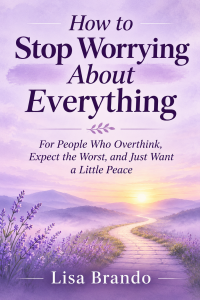
From The Finding Peace Series
How to Stop Worrying About Everything
For people who overthink, expect the worst, and just want a little peace. My book includes reflections on making peace with the past and moving forward with greater kindness toward yourself.
What if I cannot forgive myself?
Self-forgiveness is not necessarily something that happens all at once. You may not feel ready to use the word forgiveness. Start by asking whether you have done what you reasonably can to acknowledge the mistake, address any ongoing harm and change your behavior.
Other people's feelings and decisions are not yours to control. You may wish someone would forgive you, but forgiveness cannot be demanded. What you can do is respect their boundaries and continue to make choices consistent with the person you want to become.
It is possible to hold yourself accountable while refusing to spend every remaining year of your life condemning yourself.
When regret becomes difficult to manage
If painful memories, guilt or self-criticism persist, interfere with your sleep or relationships, or leave you unable to enjoy daily activities, consider speaking with a healthcare provider or licensed mental health professional. Intense or persistent guilt can accompany conditions that deserve appropriate care. You do not need to decide on a diagnosis yourself or face those feelings alone.
Frequently asked questions about regretting the past
Why do embarrassing memories come back years later?
Memories can return when something reminds you of an event or when your attention is not occupied by other activities. Their return does not establish that the event still requires action. If it is already resolved, acknowledge the memory and gently return to your current activity.
Does forgiving myself mean I am excusing what I did?
No. You can accept responsibility, make appropriate repairs and learn from your choices while treating yourself with compassion. Forgiveness does not erase consequences or remove obligations.
How do I stop thinking about things I cannot undo?
Recognize what is irreversible, allow yourself to grieve, and identify what can still be changed today. When your mind returns to the same question, remind yourself of the useful lesson and redirect your attention to something that belongs to the present.
How do I move forward after a serious mistake?
Take any necessary action to address ongoing harm, consider appropriate professional or practical guidance, and commit to a specific change. Moving forward can be gradual, especially when there are lasting consequences.
How do I stop replaying an embarrassing conversation at night?
Ask whether you can learn anything new or take a useful action. If not, write down the lesson and give yourself permission to revisit it later if necessary. My guide to overthinking at night offers a bedtime exercise.
Can I move forward even if someone does not forgive me?
Yes. Respect their wishes and boundaries, take responsibility for any harm and focus on changing the choices that are yours to make. Moving forward does not require forcing someone else to forgive you.
You can regret the past without letting it steal your future
We cannot go back and change a single moment of yesterday. But we can decide how to respond to the life that is still ahead of us. I hope you will give yourself the chance to experience it, even if there are things you wish had turned out differently.
Find more peace - related free guides
Helpful, reliable resources
- NHS Every Mind Matters: Reframing Unhelpful Thoughts - exploring more balanced ways to interpret thoughts.
- NHS Every Mind Matters: Dealing With Change and Uncertainty - coping with difficult experiences and uncertainty.
- National Institute of Mental Health: Do I Need Help? - guidance on when to seek professional support.

About Lisa Brando
Lisa Brando is the author of The Finding Peace Series, an artist, mother, grandmother, business owner and U.S. Coast Guard veteran. She began publishing her books at 64, drawing on her own experiences to encourage readers facing worry, guilt and major life changes.
This article offers general educational information and personal encouragement, not medical advice, diagnosis or a substitute for professional care.