Why do I feel guilty for doing nothing?
You may feel guilty when you rest because you've learned to associate being busy with being responsible, useful or worthy. If you spend much of your life working, caring for others or meeting expectations, taking a break can feel unfamiliar or undeserved. That feeling does not automatically mean you're doing something wrong. Rest is a basic part of taking care of yourself, not a reward you must earn by finishing every task.
- Ask whether a task is genuinely urgent.
- Choose a realistic stopping point for today.
- Take a small break without waiting for the guilt to disappear.

I know this feeling. As a mother of six, grandmother and business owner, I've always had something that needed my attention. When you run your own business, there really isn't an obvious end to the workday. There is always another website to fix, another decision to make or something else that could be improved.
When I started writing my books at 64, I discovered something interesting. I enjoyed writing so much that it felt like a break from the pressure of my other work. It reminded me that making room for something you enjoy can be valuable, even when there are unfinished tasks waiting for you.
That is why I wrote How to Stop Feeling Guilty for Resting. If you struggle with giving yourself permission to slow down, I hope this article helps.
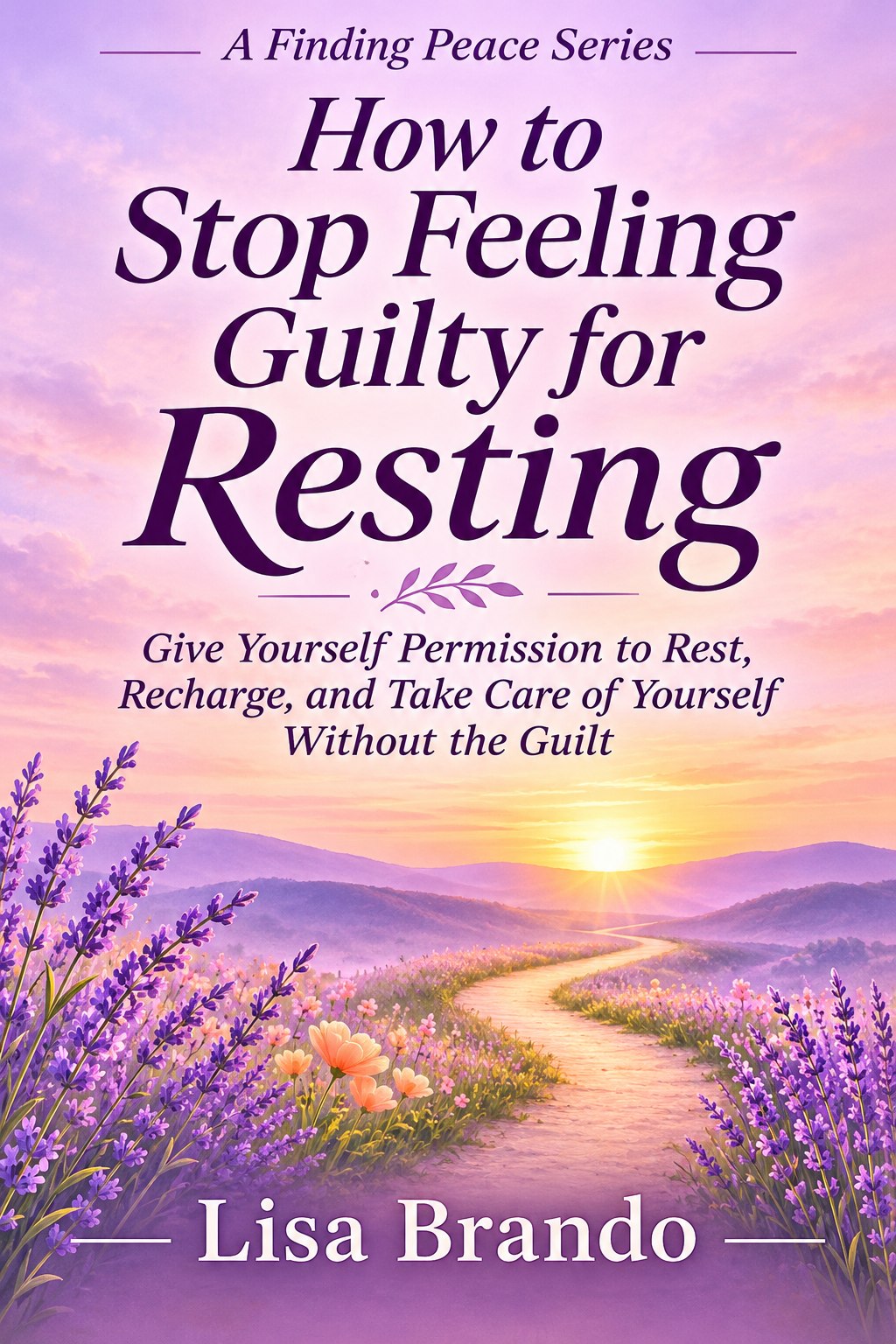
From The Finding Peace Series
How to Stop Feeling Guilty for Resting
Give Yourself Permission to Rest, Recharge, and Take Care of Yourself Without the Guilt.
View My Book on AmazonWhy do I feel like I should always be doing something?
Rest guilt is a useful everyday description of the discomfort people sometimes experience when they slow down. It is not a medical diagnosis. There are several reasons this feeling may develop, and not everyone relates to all of them.
You have learned to measure your worth through work
When praise and recognition are closely tied to accomplishments, it can be easy to begin judging yourself by how much you get done. An afternoon spent relaxing may then feel like an afternoon in which you somehow failed, even when you genuinely needed it.
You feel responsible for everyone else
Parents, caregivers, partners and people supporting relatives can become accustomed to putting other people's needs first. If this is your usual role, taking time for yourself may feel selfish even when your responsibilities are being met.
You are afraid of falling behind
When finances are uncertain or your workload is demanding, you may worry that stopping will make things worse. Sometimes a real deadline needs your attention. But many tasks can wait for an hour without serious consequences. My guide to worrying about things you cannot control can help you sort your responsibilities. Distinguishing the two can help you decide when a break is reasonable.
You are uncomfortable with an unfinished to-do list
It is easy to postpone rest until everything is finished. The problem is that daily responsibilities have a way of replenishing themselves. There will almost always be something you could do. Waiting for a completely empty list can mean never allowing yourself to stop.
Rest is not the same thing as laziness
Rest means allowing yourself time away from demands. It may involve sleeping, sitting quietly, reading, going outside or doing something enjoyable without a performance goal. Different people find different activities restorative.
The National Institute of Mental Health includes adequate sleep, enjoyable low-stress activities and setting priorities in its guidance on caring for mental health. You do not need to justify those needs by proving how productive they will make you afterward.
It's also worth remembering that persistent exhaustion can have many causes. If you are unusually tired or unable to complete ordinary activities, consider getting appropriate medical advice rather than criticizing yourself.
6 ways to stop feeling guilty when you rest
1. Replace "I should be working" with a more honest question
Ask, "Is something genuinely urgent right now, or am I uncomfortable because I'm not busy?" The answer may be different on different days. If you have addressed an immediate responsibility, a break may be reasonable even though other things remain undone.
2. Decide what is enough for today
Before starting your day, identify the tasks that truly need attention. You can have an additional list of things you would like to accomplish, but they do not all have to become obligations. A realistic stopping point gives rest a place in your day instead of leaving it to chance. If your list feels impossible, read how to stop feeling overwhelmed.
3. Begin with a small break
If taking an entire afternoon off feels difficult, try ten minutes. Make yourself a cup of tea, sit outside or listen to music. Notice the guilt without immediately obeying it. You can take a break even when the feeling has not disappeared.
4. Stop turning every enjoyable activity into a project
You do not need to read a certain number of pages, improve a skill or make money from a hobby for it to be worthwhile. If you enjoy drawing, reading, gardening or watching a favorite television show, you are allowed to enjoy it simply because you enjoy it.
5. Ask for help and share responsibilities
If everything falls on you, rest can seem impossible. Where it is realistic, ask someone to help with a task or discuss how responsibilities could be shared. Some people have very limited support; even a small change or a protected period of time may be a useful starting point.
6. Speak to yourself the way you would speak to someone you love
Would you tell a tired friend that they were worthless because they sat down? Would you insist that someone you love finish every chore before they were allowed to relax? Try offering yourself the same kindness. You do not have to be the exception to your own compassion.
A five-minute permission-to-rest exercise
When you feel guilty about taking time for yourself, write down your answers to these questions:
- What exactly do I believe I should be doing right now?
- Is it genuinely urgent, or can it wait?
- What would I tell someone I love in the same situation?
- What kind of break would feel helpful today?
- When will I return to the task, if it still needs attention?
Guilty thought: I should be fixing my website instead of sitting down.
Reality: The necessary work is done for now. The remaining changes can wait until tomorrow.
What I would tell a friend: You've worked hard today. It's okay to enjoy your evening.
My choice: I'll give myself half an hour to read a book without checking my work.
Your answers are not submitted or saved by this worksheet. Print a copy if you want to keep them.
The next time the guilty thought returns, remind yourself of your decision. You do not need to make a new argument for resting every five minutes.
What if I feel guilty even after I've taken a break?
Feelings can take time to change. Guilt may still appear when you do something different from what you are accustomed to doing. Instead of using the feeling as proof that you made a bad decision, ask whether you actually neglected something important. If not, you can continue practicing rest without waiting to feel completely comfortable with it.
Some days you may find it easier than others. That doesn't mean you are moving backward. You are learning something new about how to treat yourself.
When to seek additional support
If guilt is constant, severe or accompanied by persistent low mood, anxiety, sleep difficulties or trouble functioning, consider speaking with a healthcare provider or licensed mental health professional. You do not need to figure out the cause on your own, and a self-help book is not a substitute for appropriate professional care.
If responsibilities make it difficult to meet your basic needs, asking for practical help may also be important. You deserve support rather than judgment.
Frequently asked questions about feeling guilty for resting
Is it normal to feel guilty when I relax?
Many people experience this feeling, particularly when they have demanding responsibilities or strong expectations about productivity. Feeling guilty does not necessarily mean taking the break was wrong.
Do I have to finish my work before I can rest?
No. Necessary deadlines matter, but most people have ongoing responsibilities that are never completely finished. Choose a reasonable stopping point and protect time for basic needs and enjoyable activities.
Why can't I enjoy my day off?
You may still be mentally occupied by responsibilities or worried about what you haven't completed. Creating a simple plan for your next workday can help you set those tasks aside. If difficulty enjoying things persists, speak with a healthcare professional.
How can I rest without feeling lazy?
Start by recognizing that a break is not a judgment about your character. Identify what needs attention, decide what can wait, and practice taking time away from demands without requiring yourself to earn it.
What is productivity guilt?
Productivity guilt is the discomfort you may experience when you judge yourself for not being busy. It is an everyday expression rather than a diagnosis. Recognizing that feeling can help you question whether you really need to be working at that moment.
Can I take a break even if I still feel guilty?
Yes. If your urgent responsibilities are addressed, you can choose a reasonable break even when the feeling remains. You do not need to wait until you feel perfectly comfortable with resting.
You do not have to earn your right to rest
I wish someone had told me years ago that there didn't have to be a perfectly finished to-do list before I could enjoy my life. Responsibilities are part of living, but they are not the entirety of it. You are allowed to have an afternoon that is simply pleasant.
If you recognize yourself in this article, my book How to Stop Feeling Guilty for Resting goes deeper into the pressure to always be productive and the process of treating yourself with greater kindness.
Helpful, reliable resources
- National Institute of Mental Health: Caring for Your Mental Health - information about self-care, enjoyable activities and setting priorities.
- National Institute of Mental Health: Do I Need Help? - guidance on recognizing when professional support may be helpful.

About Lisa Brando
Lisa Brando is the author of The Finding Peace Series, an artist, mother, grandmother, business owner and U.S. Coast Guard veteran. She began publishing her books at 64, drawing on her own experiences to encourage readers facing worry, guilt and major life changes.
This article offers general educational information and personal encouragement, not medical advice, diagnosis or a substitute for professional care.