How do I stop worrying all the time?
Start by writing down exactly what you're worried about. Separate the problems you can act on from the situations you cannot control. Take one realistic step toward a solvable problem, set aside time to revisit other worries, and return your attention to what is happening right now. The goal is not to eliminate every worried thought, but to spend less of your life caught up in them.
- Name the worry and check the facts.
- Choose one action you can take.
- Set aside what cannot be solved right now.

I know what it's like to worry about my children, my business, my finances, my health and everything in between. Just when one concern seems to settle down, another one comes along. Sometimes the things we're worried about haven't even happened.
For a long time, I wanted to know how to turn all of that off. But worrying isn't a switch we can simply flip. What we can learn is how to respond differently when those thoughts arrive. That is one of the reasons I wrote my book, How to Stop Worrying About Everything.
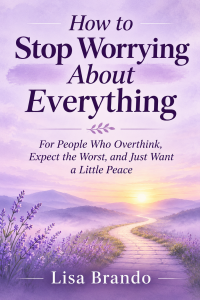
My book on Amazon
How to Stop Worrying About Everything
For people who overthink, expect the worst, and just want a little peace.
Why do I worry about everything?
Worry often starts with a genuine concern. Maybe your bills are due, a loved one hasn't called, or something at work is uncertain. Thinking about a situation can help you prepare, but repeatedly imagining everything that could go wrong doesn't necessarily help you solve it.
When your mind keeps asking what might happen next, it can become difficult to enjoy the things that are going well. The thought may feel urgent even when there is nothing useful you can do at that moment.
Occasional worry is normal. Persistent, excessive worrying that is hard to control and interferes with sleep, work or relationships can also be a symptom of an anxiety disorder. Only a qualified professional can evaluate whether that is the case for you.
7 practical ways to stop getting lost in worry
1. Give the worry a name
Instead of saying, "Everything is going wrong," get specific. What is actually bothering you? Write one plain sentence: "I'm worried I won't have enough money for rent," or "I'm worried about my daughter's health." When everything is lumped together, it can feel impossible to deal with. One concern is easier to examine than twenty.
2. Separate facts from predictions
Imagine someone you love hasn't returned your call. The fact is that they haven't called back yet. The prediction might be that something terrible has happened. Those are two different things. For more on this habit, read how to stop expecting the worst. Ask yourself what you know, what you are assuming, and what other explanations might exist. This doesn't mean ignoring genuine problems; it means not treating every frightening possibility as established fact.
3. Take action on what you can control
If you're worried about an upcoming bill, look at when it is due and what options are available. If you're worried about a conversation, decide what you want to say. Choose one manageable action. You do not need to solve the entire situation before you are allowed to take a break. If the situation is outside your influence, my guide to letting go of what you cannot control may help.
4. Schedule a short time to think about worries
The NHS describes setting aside a brief daily period to think through concerns instead of allowing them to dominate the entire day. Try choosing a 10- to 15-minute window that suits you. If a nonurgent worry appears at another time, write it down and return to it during that window. Urgent issues that require immediate attention should not be postponed.
5. Stop asking yourself to predict the future
There is no way to know exactly how every situation will turn out. You can plan for realistic possibilities, but you cannot guarantee that nothing difficult will ever happen. Ask yourself, "What would I do if that happened?" If you have a reasonable plan, allow yourself to stop rehearsing the same scenario. You can also read how to break the what-if cycle.
6. Return to the part of life you are actually living
When you notice yourself getting caught up in an imagined situation, gently pay attention to your surroundings. Feel your feet on the floor, notice the room around you or focus on the task you were doing before the worry interrupted you. You don't have to argue with every thought. You can notice it and then choose what deserves your attention right now.
7. Don't punish yourself for worrying
Getting frustrated with yourself for having worried thoughts creates another problem on top of the original one. Progress might be noticing a thought sooner, spending less time on it, or deciding not to check something for the tenth time. Small changes matter. You can work on worrying less without demanding perfection from yourself.
A five-question worry worksheet
Take a piece of paper or open the notes app on your phone. Pick just one concern and answer these questions:
- What exactly am I worried about?
- What facts do I actually have?
- What am I predicting might happen?
- Is there anything useful I can do about it today?
- If there isn't, when can I reasonably revisit it?
Example: I'm worried about my business not making enough money this month.
Facts: Sales have been slower than expected this week. I haven't reached the end of the month.
Prediction: I'm assuming nothing will improve and everything will fall apart.
Next step: Review my actual expenses and choose one productive business task for tomorrow.
Permission: Once I have made that plan, I can stop trying to solve the whole month tonight.
Your answers stay on this page; they are not submitted or saved by the worksheet. Print a copy if you want to keep them.
Try this exercise whenever a worry starts to take over. It's a way to approach one problem at a time rather than treating every possible outcome as a present emergency.
How to stop worrying at night
Nighttime can be especially difficult because there are fewer distractions. When you are lying in bed, a concern that seemed manageable earlier may suddenly feel enormous. If that happens, jot down the concern and one possible next step for the following day. Give yourself permission to leave nonurgent decisions until you are rested.
A consistent bedtime routine and a quiet activity before bed may help you settle down. If worry regularly keeps you from sleeping, speak with a healthcare professional rather than assuming you have to manage it alone. Read my full guide to quieting an overthinking mind at night.
When worrying becomes more than everyday stress
There is a difference between experiencing ordinary worries and feeling that worry is controlling your life. If your worries are persistent, worsening, difficult to manage or interfering with sleep, relationships, work or everyday activities, consider speaking with a licensed mental health professional or your healthcare provider. You deserve support, and effective treatments are available.
I'm sharing ideas from lived experience as an author, not diagnosing or treating anyone. Self-help books and articles can offer encouragement alongside appropriate professional care.
Common questions about worrying
Can I completely stop worrying?
Worry is a normal part of life. Rather than expecting never to worry again, aim to recognize when it is useful and when it has become repetitive. Learning to respond more calmly is a realistic goal.
Why do I imagine the worst possible outcome?
When you're uncertain about something, you may mentally prepare for a frightening outcome. Ask whether the fear is supported by the facts and whether there are other plausible outcomes. A thought is not proof of what will happen.
How do I stop worrying about things I can't control?
Identify the part you can influence and take a practical step if one exists. For the rest, acknowledge that you cannot know the outcome or control every circumstance. Acknowledge your feelings without requiring yourself to solve the impossible.
Is worrying the same as anxiety?
Worry usually describes thoughts about possible problems. Anxiety can involve those thoughts as well as emotional and physical symptoms. A professional can help you understand persistent or disruptive symptoms.
What can I do right now when I feel overwhelmed by worry?
Pause and name one concern, rather than trying to solve all of them at once. Write down one practical next step. If there is nothing you can do immediately, focus on something in the present, such as a quiet activity or the task in front of you. If your worry feels unmanageable, talk to a qualified professional.
How can I tell if worrying is helping me?
Ask whether your thoughts are leading to a realistic decision or action. If you're repeatedly rehearsing the same frightening possibility without learning anything new or changing your plan, it may be time to pause and revisit the concern later.
A little encouragement from me
One thing I would like you to remember is that your life is happening now. Not when all the bills are paid, not when every family problem is solved, and not when everything finally goes according to plan. You deserve moments of peace even while some things remain uncertain.
If you see yourself in this article, my book How to Stop Worrying About Everything explores these everyday struggles in more depth, with encouragement and practical reflections.
Find more peace - related free guides
Helpful, reliable resources
- NHS Every Mind Matters: Tackling Your Worries - practical strategies, including setting aside time for worries.
- National Institute of Mental Health: Generalized Anxiety Disorder - symptoms and treatment information.
- National Institute of Mental Health: Do I Need Help? - guidance on recognizing when to seek professional support.

About Lisa Brando
Lisa Brando is the author of The Finding Peace Series, an artist, mother, grandmother, entrepreneur and U.S. Coast Guard veteran. She began publishing her books at 64, drawing on her own experiences to encourage readers facing worry, guilt and major life changes.
This article provides general educational information and personal encouragement, not medical advice, diagnosis or a substitute for professional care.